
Mango Isn’t Just a Trend—It’s a Staple Driving Innovation
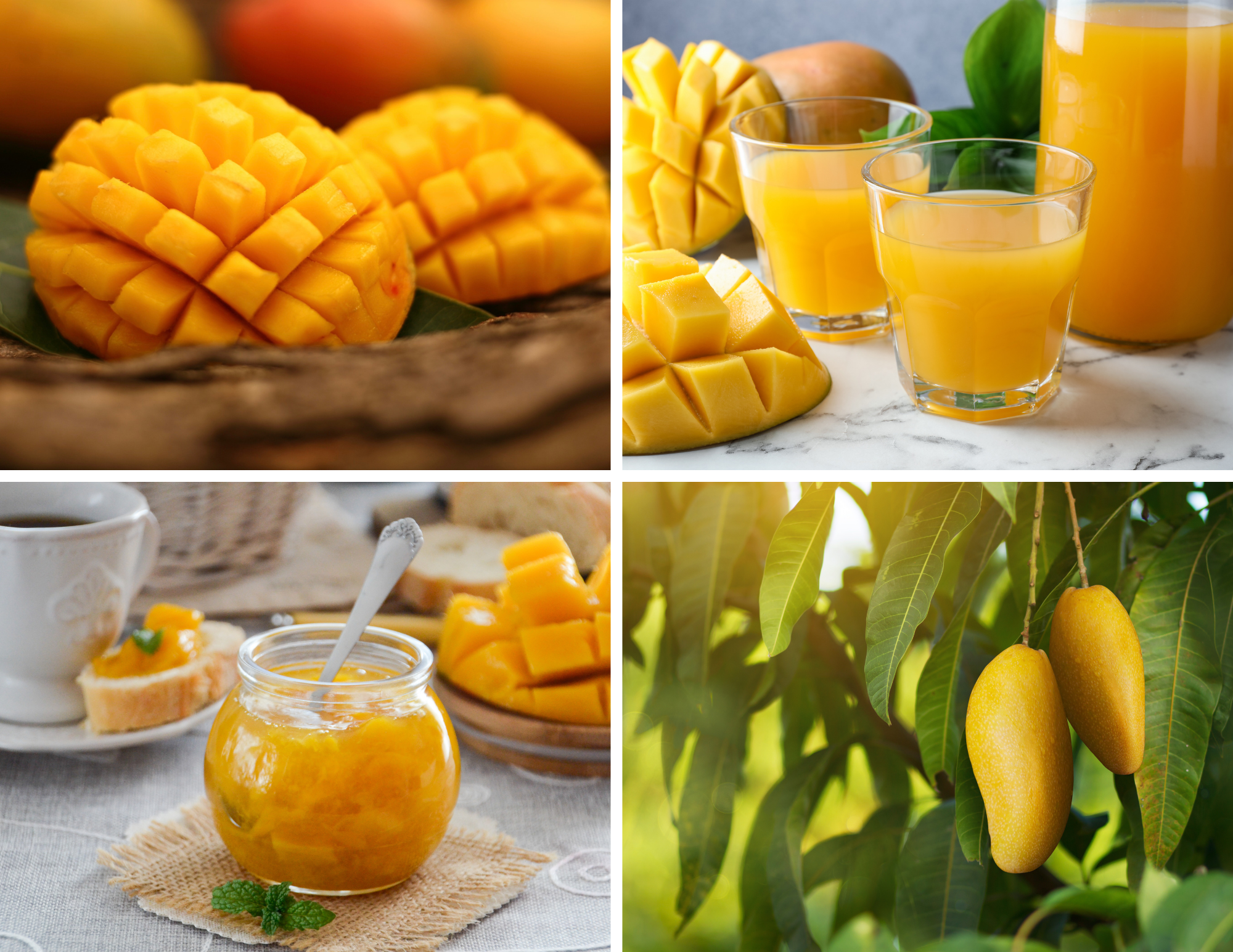
There’s always a lot of conversation around “what’s next” in flavor. What’s emerging. What’s disruptive. What consumers haven’t seen yet.
But mango doesn’t really fit into that conversation—and that’s exactly why it matters.
Because while new, niche flavors cycle in and out of the spotlight, mango has quietly become something more important: a baseline flavor that innovation is built around.
🥭 From Tropical to Foundational
Mango has moved beyond being a seasonal or niche tropical flavor. Today, it’s a globally recognized, consumer-loved staple that continues to show strong growth across food and beverage categories.
From juices and smoothies to functional beverages, sauces, and desserts, mango delivers on what today’s consumers are looking for:
familiarity, natural sweetness, and a versatile tropical profile.
At iTi Tropicals, we’re seeing mango play a bigger role in product development—not just as a flavor, but as a formulation tool.
🥭 The Shift: From Flavor to Function
Mango used to be positioned as “tropical” or “exotic.” Now, it’s just… expected.
It shows up everywhere—beverages, functional drinks, dairy and plant-based, culinary—not because it’s trendy, but because it works.
It’s familiar without being boring.
Sweet, but not one-dimensional.
Tropical, but widely accepted.
And that combination makes it one of the few ingredients that can carry innovation without needing to justify itself first.
🥭 Why Mango Keeps Showing Up
It Reduces Risk Without Limiting Creativity
There’s a constant tension in product development:
You want to do something new—but not so new that consumers hesitate.
Mango gives you a flavor consumers already understand, which creates space to layer in functionality, experiment with formats, and push into new categories.
It’s not the headline—it’s what makes everything else possible.
🥭 It Acts as a “Functional Canvas”
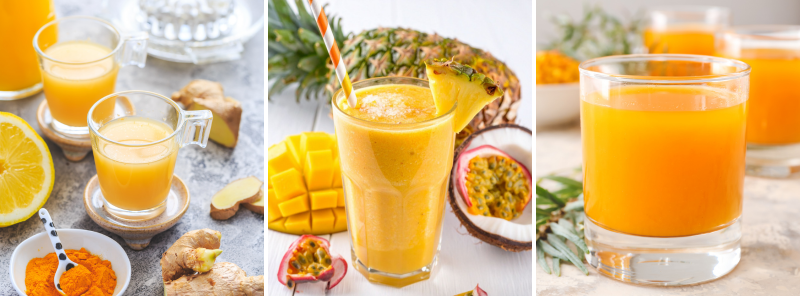
As more products move toward benefit stacking—hydration, energy, cognitive support, gut health—the challenge isn’t just functionality anymore. It’s making all of it work together.
Because the more you add, the harder flavor becomes. You’re balancing bitterness, earthy notes, acidity—and often multiple directions at once. That’s where mango starts to do more than just “taste good.”
Natural sweetness that softens without overpowering
Body that helps carry more complex systems
A rounded profile that bridges otherwise competing notes
It doesn’t mask everything—it connects everything.
Which is why mango is showing up more often as the foundation in functional formulations—not as the hero flavor, but as the piece that makes the whole product actually work.
🥭 It Aligns with Where “Better-for-You” Is Going
“Better-for-you” isn’t just about removing things anymore—it’s about building products that still feel enjoyable.
Mango fits naturally into that shift. It’s recognizable, fruit-forward, and flexible across formats.
It allows brands to move toward cleaner labels and more intentional formulations without sacrificing flavor experience.
🥭 Where Mango Variety Matters (And Where It Doesn’t)
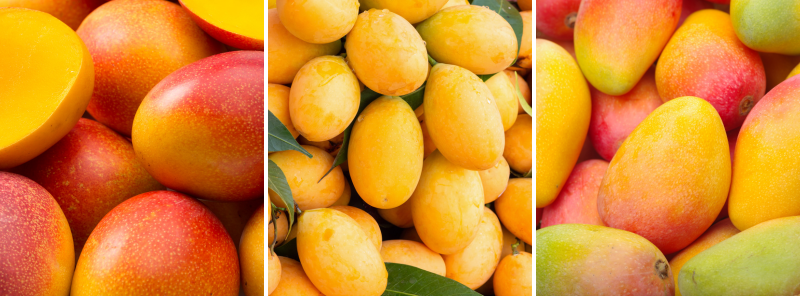
One of the biggest misconceptions is that all mangoes are interchangeable. In some applications, they can be—but in others, the differences are significant. In some applications, they can be. In others, the differences are significant—and they show up quickly in the finished product.
That’s where understanding variety and origin becomes important—not as a limitation, but as a tool.
Different mango types bring different attributes to a formulation:
Indian mangoes (like Totapuri) tend to be brighter in color, with a higher acid-to-Brix ratio and a greener, more floral profile. They work especially well when balance is critical or when you need to cut through sweeter systems.
South American mangoes (like Tommy, Edward, and Kent) offer a smoother mouthfeel, a milder sweetness, and a more neutral profile. That versatility makes them a strong option across a wide range of beverage and food applications.
Alphonso mango (India) is in a category of its own—rich, almost buttery in texture, with a smooth, indulgent mouthfeel and distinctive floral aromatics. It’s often used when mango is meant to be a defining part of the experience, not just a supporting note.
In practice, some varieties can be used interchangeably depending on the application, formulation, and supply considerations. But not all substitutions are equal. A Totapuri isn’t going to behave like an Alphonso—and shouldn’t be expected to.
That variability isn’t a challenge—it’s an advantage.
It allows mango to be dialed in based on application, target flavor profile, and cost-in-use, rather than treated as a one-size-fits-all ingredient.
🥭 Format Is Part of the Strategy
The format you choose isn’t just operational—it directly shapes how the finished product performs.
Purée brings body, texture, and a more complete fruit expression, making it well-suited for applications where mouthfeel and visual presence matter.
Purée concentrate provides higher Brix in a smaller volume, offering flexibility in formulation depending on processing and finished product requirements.
Clarified concentrate delivers a cleaner, more refined profile, making it ideal for beverage applications where clarity and brightness are key.
Each format serves a different purpose.
The decision isn’t about one being better than another—it’s about aligning the format with the application, processing conditions, and desired end experience.
As formulations become more complex, format becomes part of the strategy—not just a specification. In most cases, the format decision is less about the ingredient—and more about what the product needs to do
🥭 Where Mango Is Showing Up
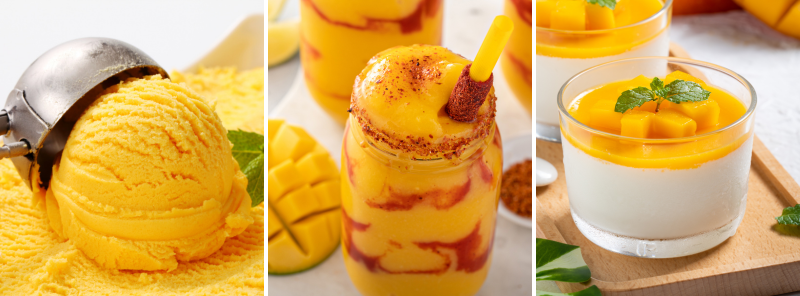
Mango continues to expand across:
RTD beverages
Functional and hydration drinks
Dairy and plant-based products
Culinary applications
Frozen Novelties
Few flavors move this easily across categories without losing relevance.
🥭 Why Mango Has Staying Power
Some flavors spike because they’re new.
Mango doesn’t need to.
It’s consistent. Familiar. Flexible.
And in a market trying to balance innovation with reliability, that combination is hard to replace.
🥭 So Where Does That Leave Mango?
Not as a trend to chase. Not as a seasonal feature. But as a foundation to build on.
Mango isn’t going anywhere.
The question isn’t whether to use it—it’s how intentionally you use it.
That’s where the difference shows up in the final product.
🥭 Discover What’s Possible with Mango
At iTi Tropicals, we work with a range of mango varieties and formats to support product development across applications.
Request a sample or connect with our team to start exploring.